Openfield
Embedded, Modular, and Cost-Effective Loudspeaker Arrays
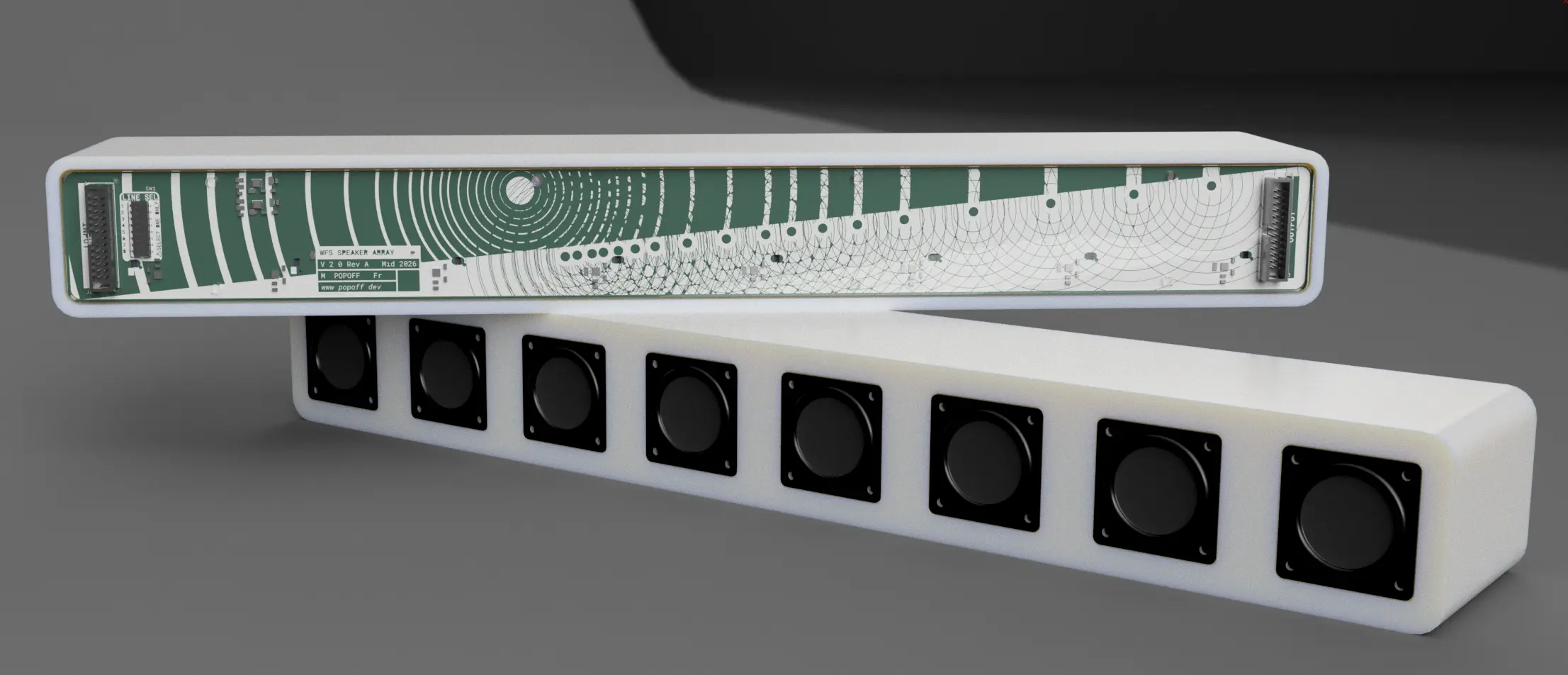
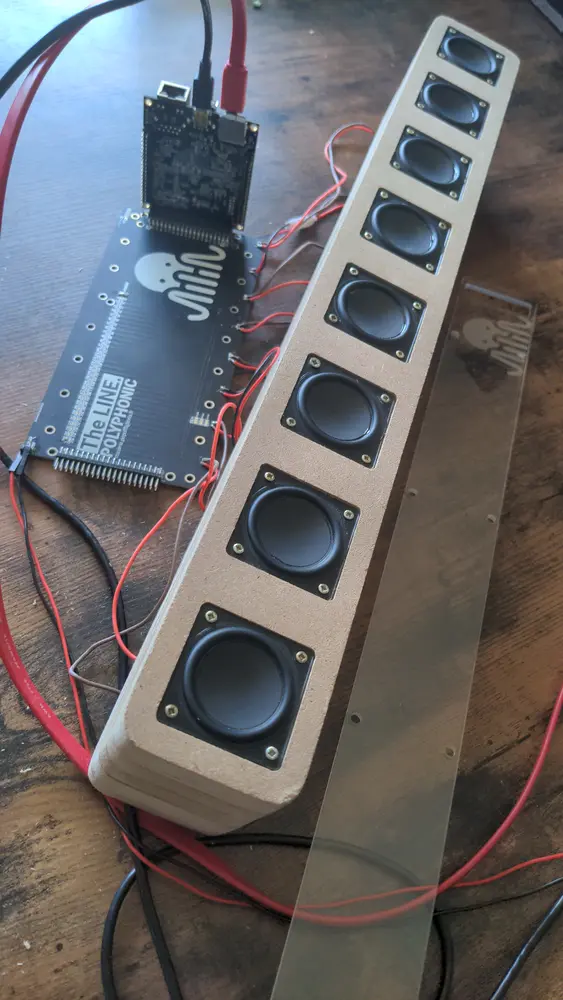
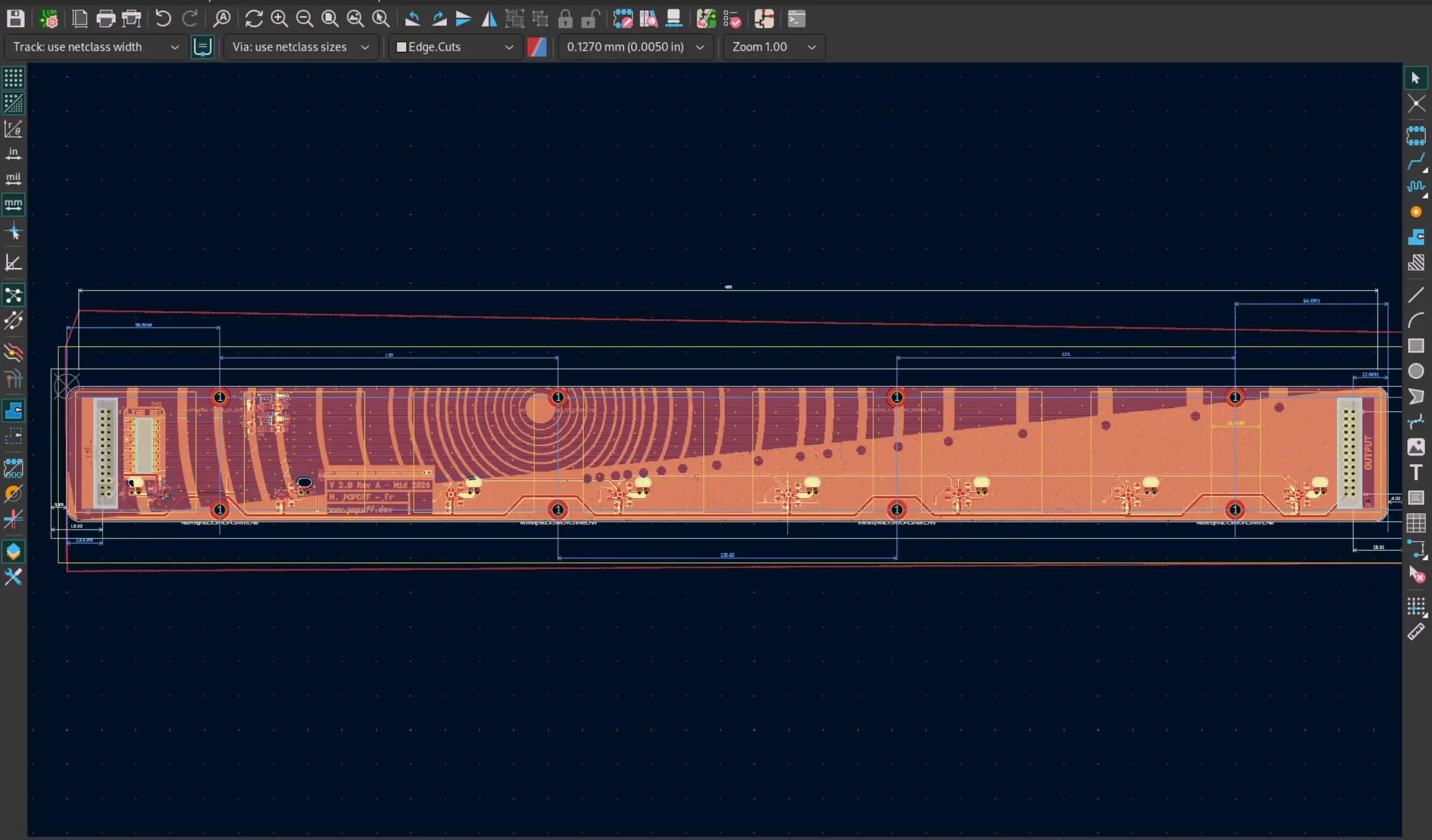
This project is an 8-speaker, 50×7×7cm bar, chainable up to 128 speakers with a single FPGA to provide a cost-effective speaker array. It comes with WFS and beamforming/steering implementations, controlled through a single USB line, which handles sending up to 16 audio sources from a computer and positioning those sources in space via MIDI. This is a direct evolution of The Line, which I presented at NIME in London, and after seeing a lot of interest from people, I'm now developing a version geared toward commercialization.
What it does
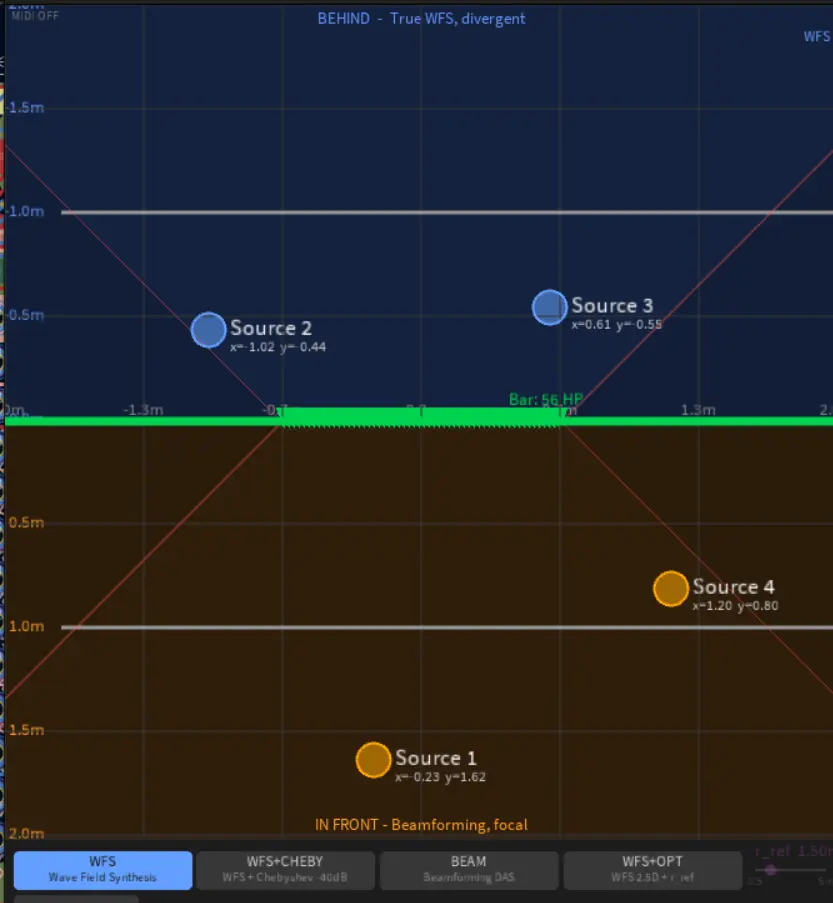
Stereo and surround build a phantom image by splitting one signal across two or more speakers, and the illusion only holds near the centre line: step to one side and the source collapses into the nearest box. This array instead rebuilds the physical wavefront a sound would produce if it were really there, using many small, closely spaced drivers fed precisely timed signals. That is wave field synthesis: a source sits at a real point in the room, hovering in mid-air in front of the array or two meters behind it with no speaker anywhere near, and it stays put as visitors walk around. Up to 16 such sources can exist at once, each moving independently.
The same hardware also does beam steering: shaping the array's directivity to aim sound at a defined zone and keep it quieter everywhere else. Where WFS places a source in space, steering decides who hears it. In practice, that means several works sharing one room without bleeding into each other, or a piece that speaks to one spot in a gallery and leaves the rest quiet.
How you'd use it
Same hardware, two workflows: driven live for a performance, or programmed once and left running in a gallery.
- Connect. One USB line from a computer to the first module carries both control and up to 16 audio channels down the whole chain, so there's no snake and no rack of amps to plan for.
- Send audio and positions. The array takes your audio sources and, for each one, an x/y position. Positions are MIDI, so moving a source is automation like any other parameter: draw a path in your DAW, generate it in Max/MSP or SuperCollider, or drive it live from a controller or a sensor. There's no proprietary scene format to learn, and your session file is the piece.
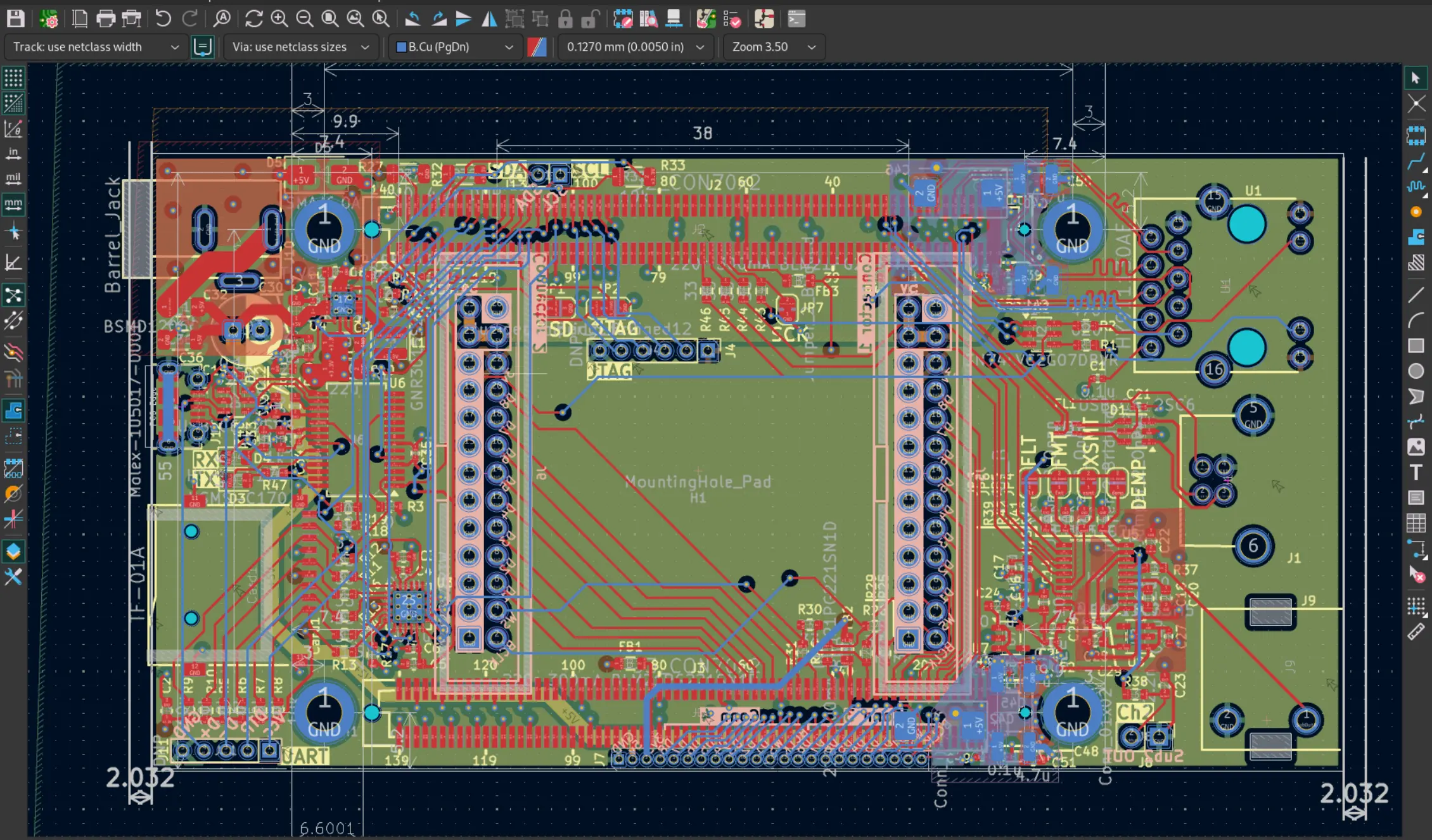
- Run it. For a performance, playback and cues come from your usual show-control setup. For a permanent installation, a session can loop unattended, and since each module runs embedded Linux, a custom playback app can run self-contained on the array itself, with no computer attached.
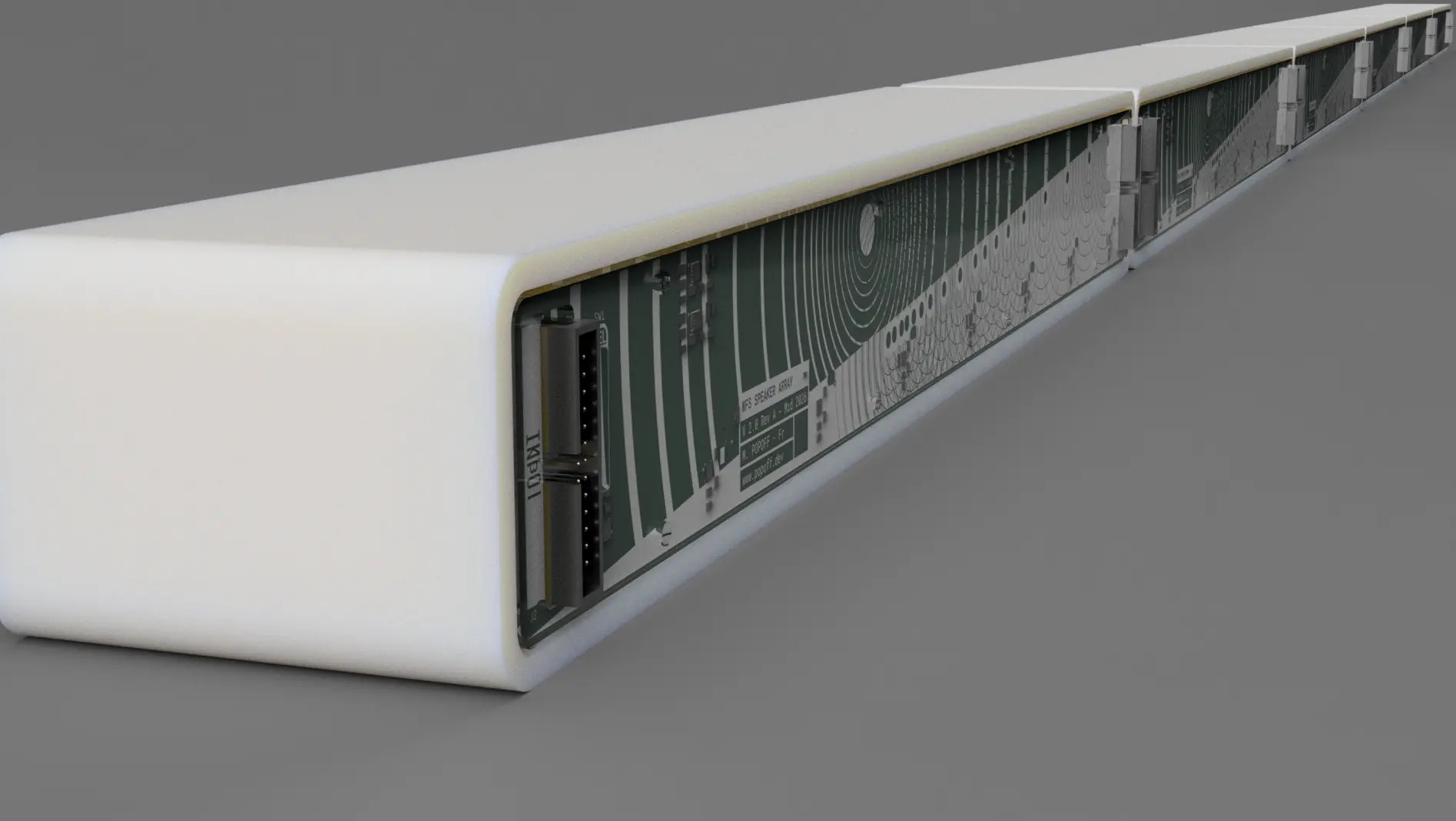
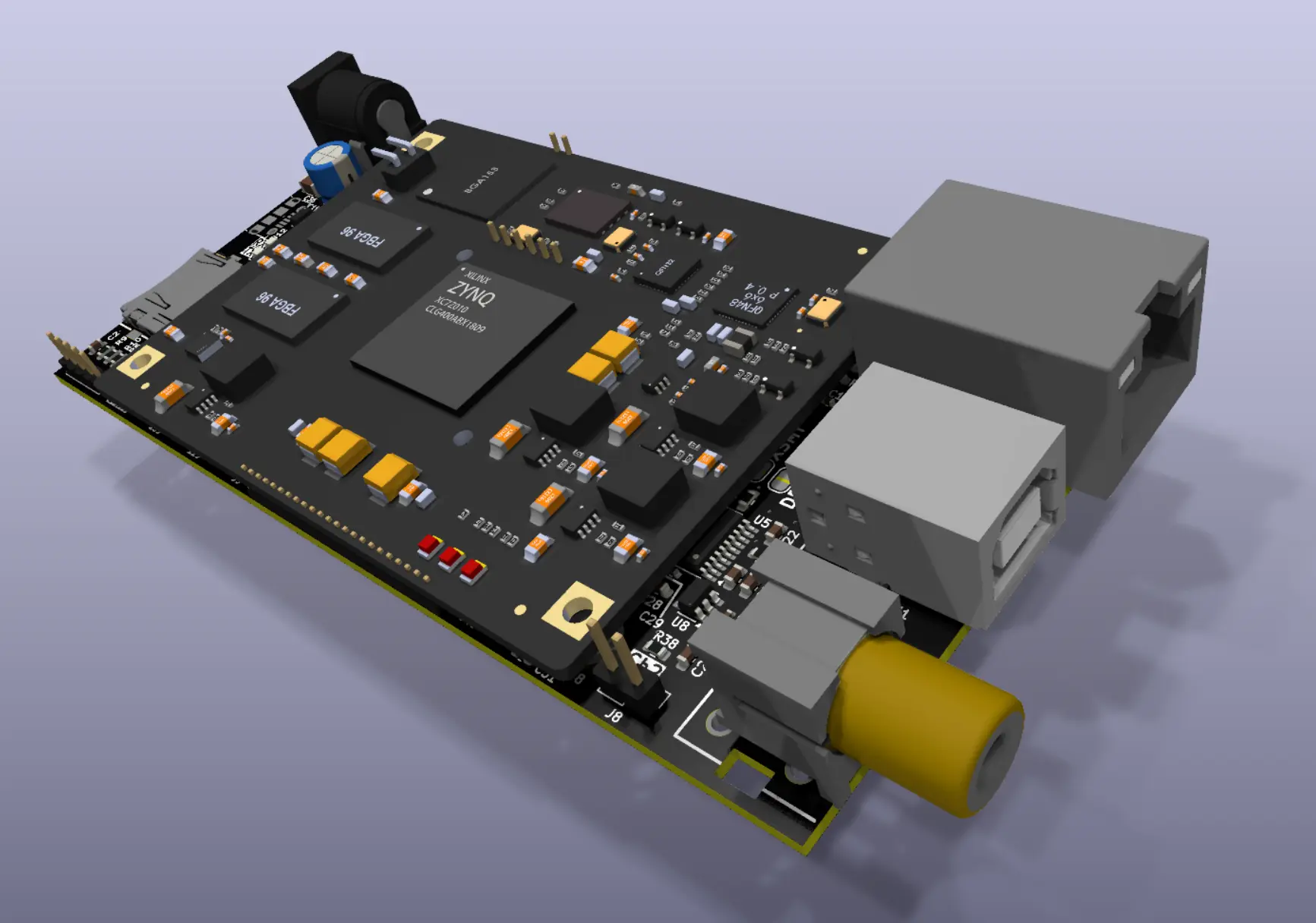
3D renders
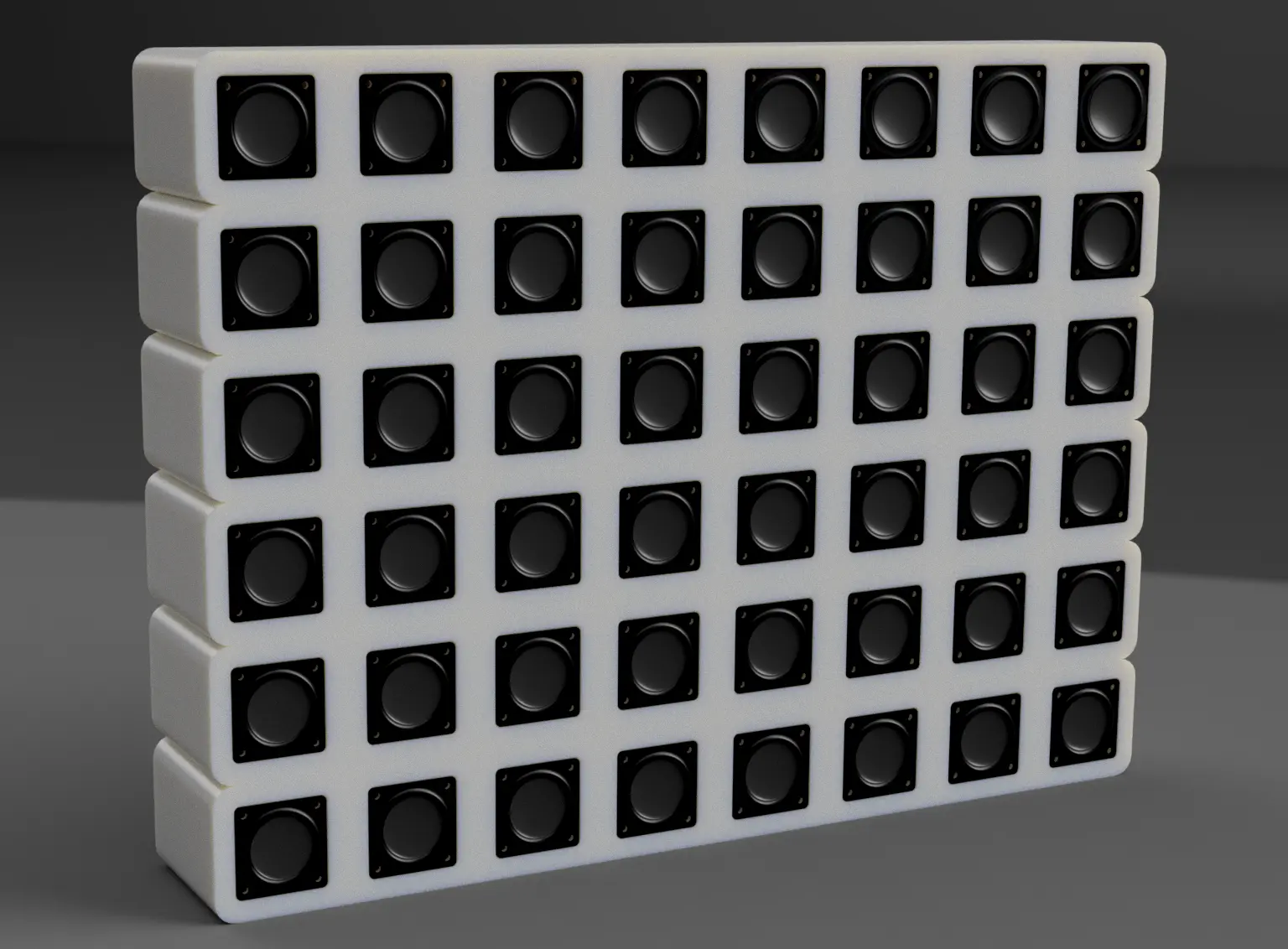
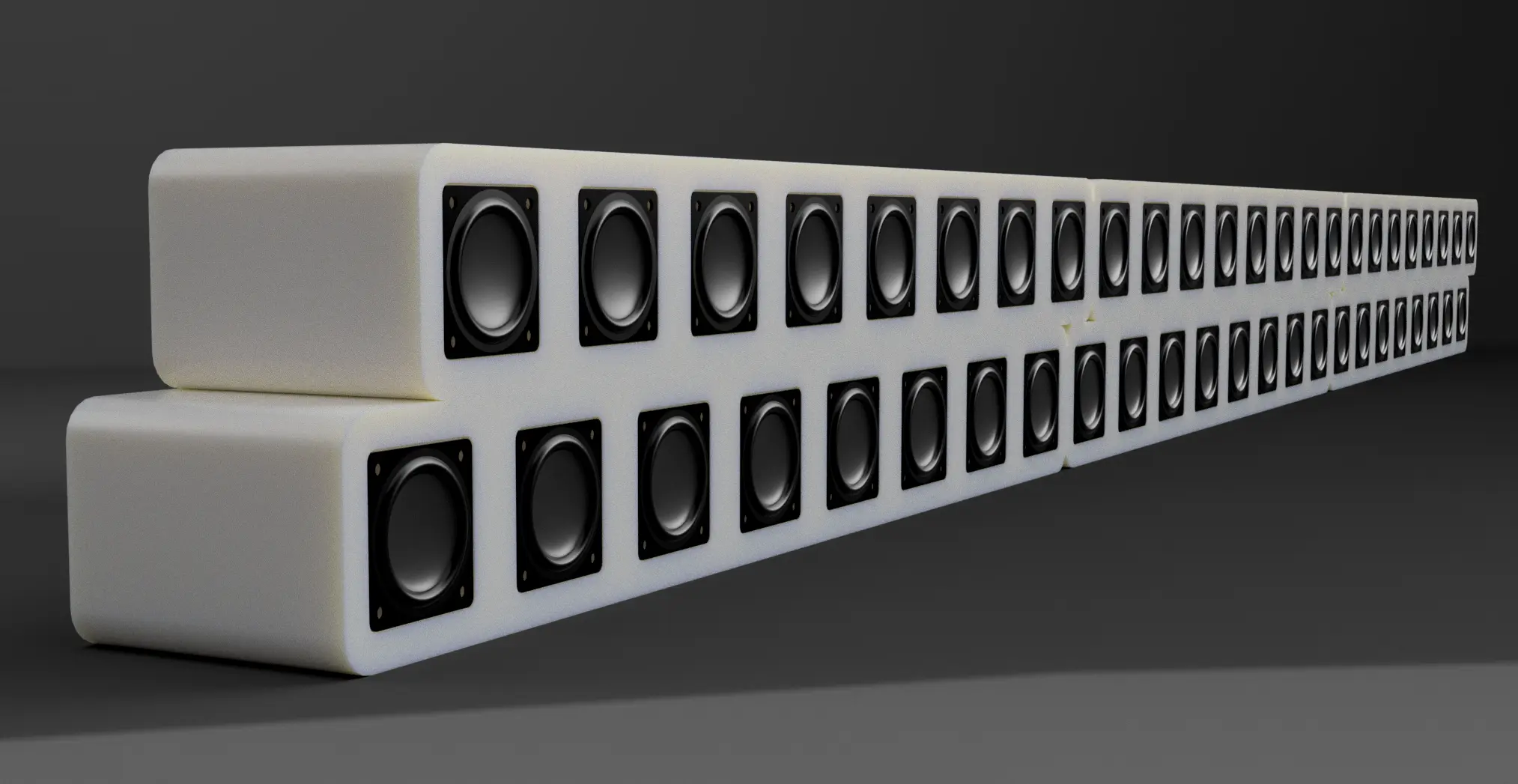
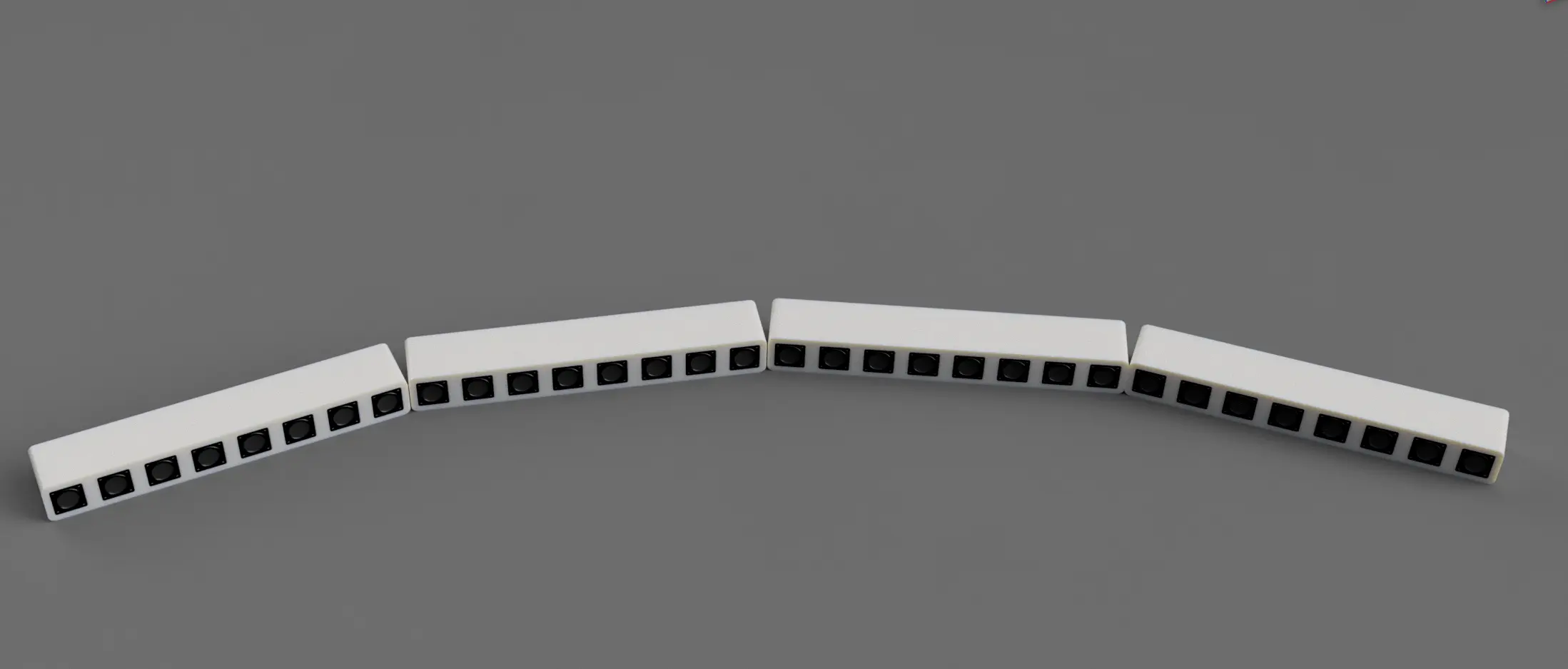
The module is designed to reconfigure into whatever geometry a space calls for: a straight bar, a curved array, stacked rows, or a full matrix.
Progress & craft
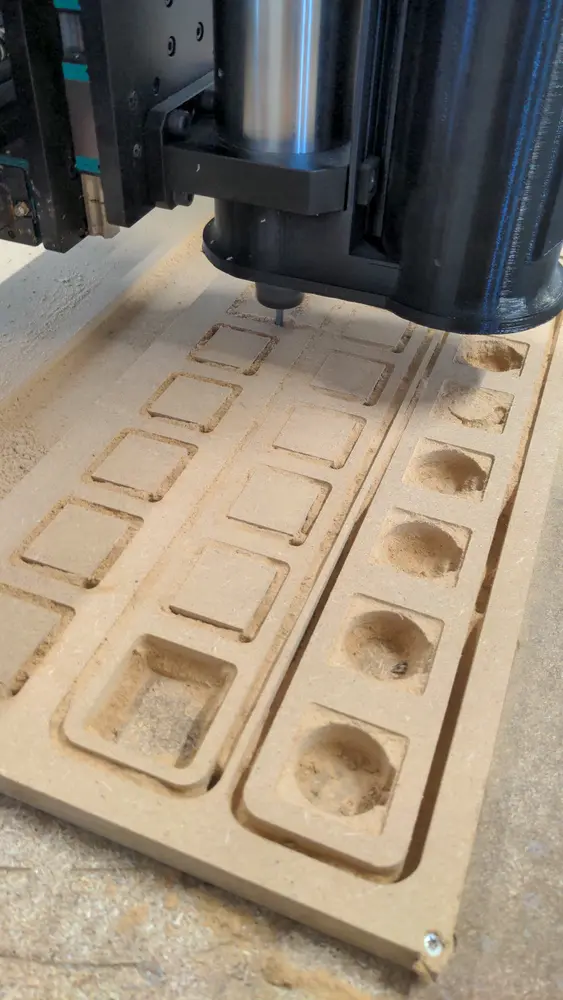
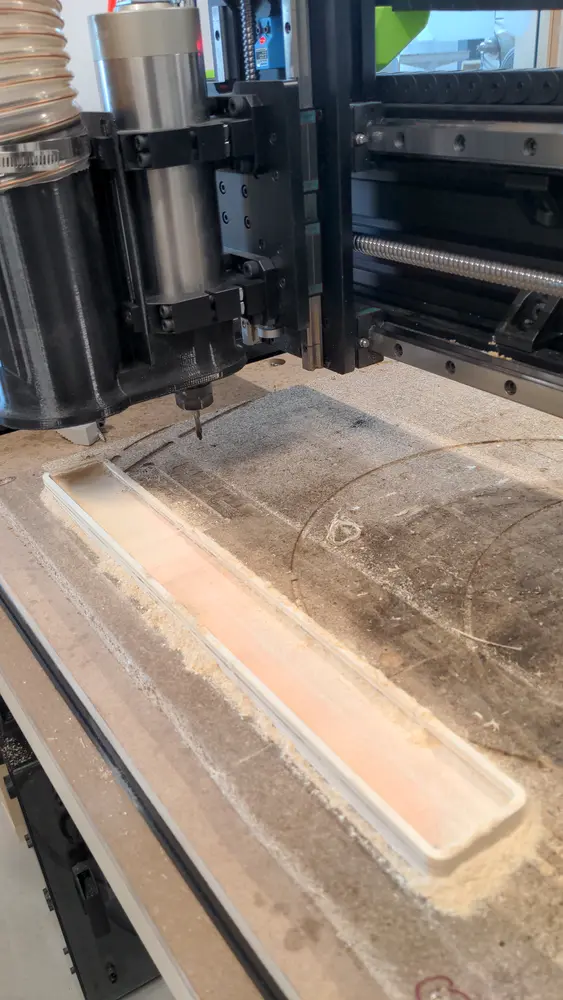
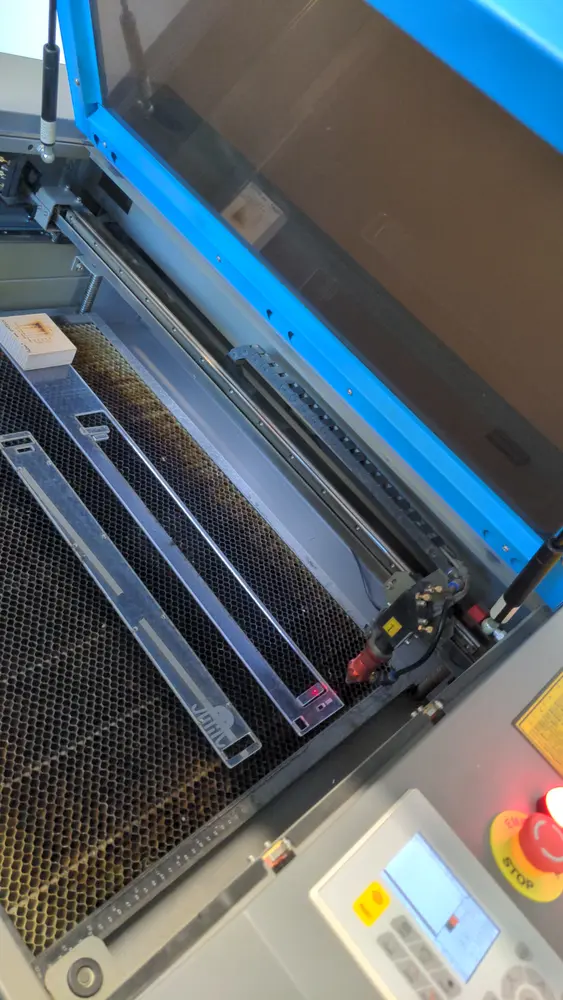
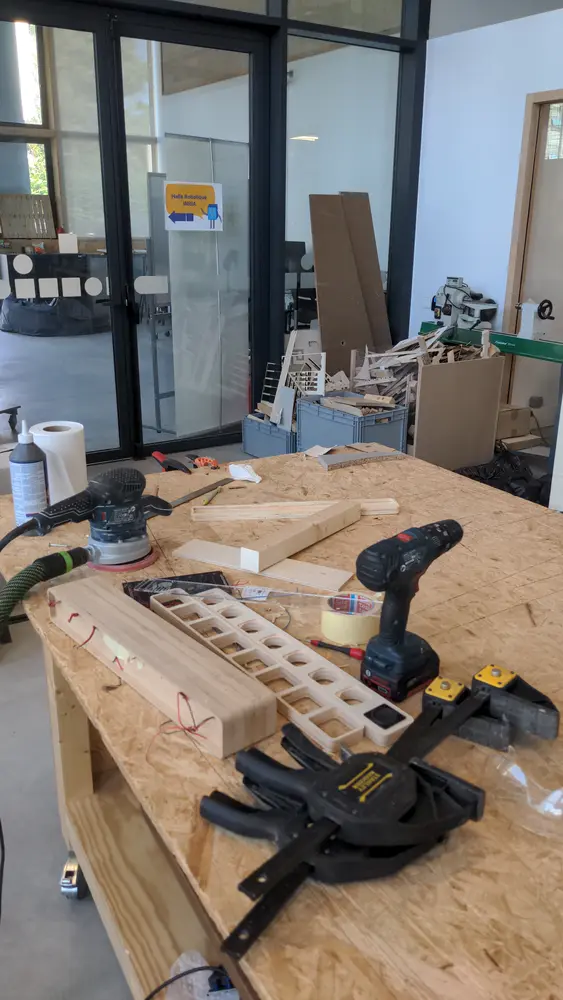
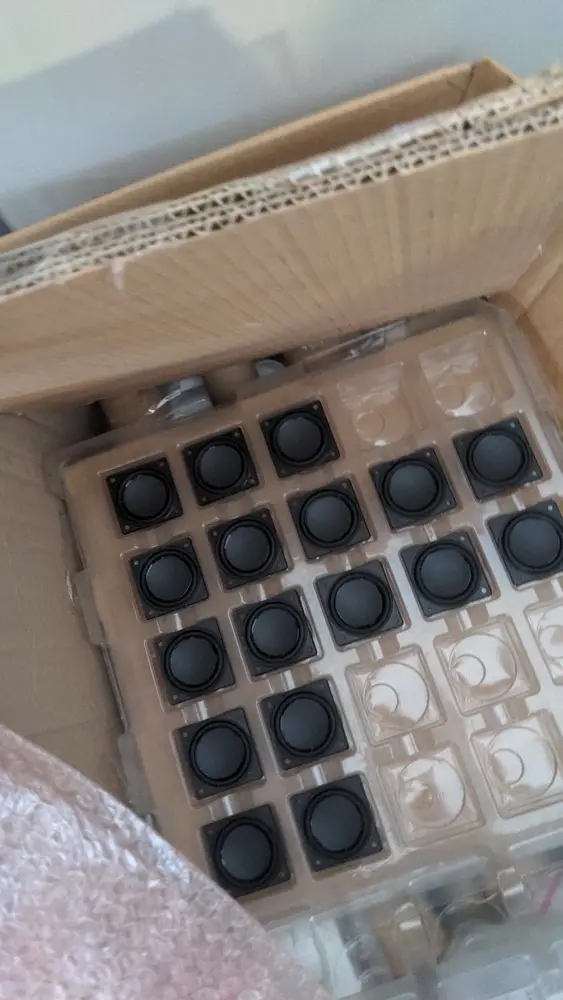
Every unit is built by hand, in a small workshop in Lyon, France: CNC-routed enclosures, laser-cut parts, hand-sanded and assembled one bar at a time. Several woods have been tested to find the best compromise between weight and acoustic quality, and the speaker drivers are currently being characterized.
What you get
Each module is a complete, self-contained slice of the array: you buy as many as the space and budget call for, and add more later without replacing anything.
Timeline & pricing
Modules are on track to be ready for late summer / early autumn. Both the price and the timeline depend a lot on how many people are interested, so if you want one, don't hesitate to leave your contact below.
No spam, just an update when the first batch is ready to order.